IOC容器初始化过程
IOC容器的初始化分为三个过程实现:
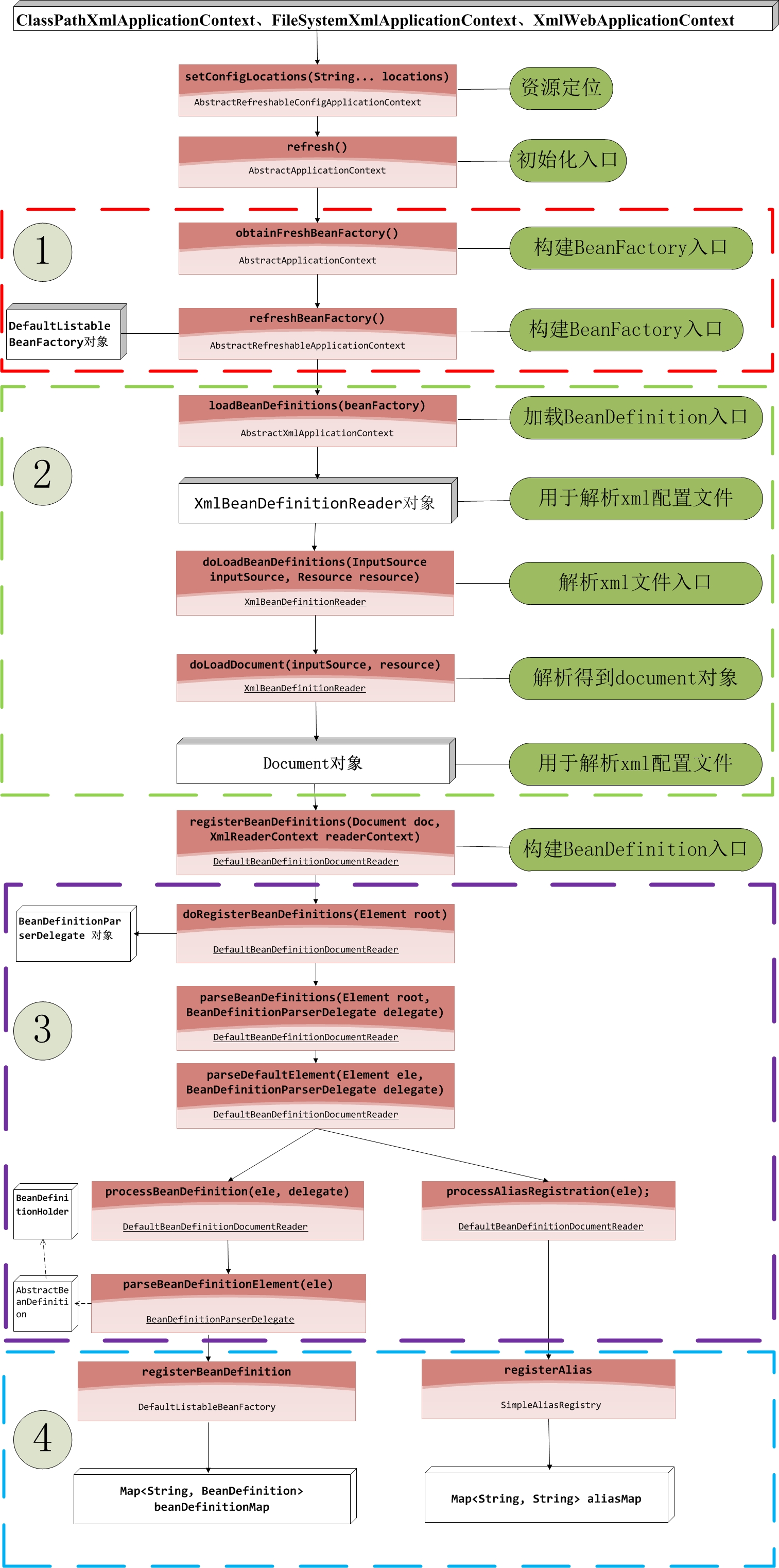
第一个过程是Resource资源定位。这个Resouce指的是BeanDefinition的资源定位。这个过程就是容器找数据的过程,就像水桶装水需要先找到水一样。
第二个过程是BeanDefinition的载入过程。这个载入过程是把用户定义好的Bean表示成Ioc容器内部的数据结构,而这个容器内部的数据结构就是BeanDefition。
第三个过程是向IOC容器注册这些BeanDefinition的过程,这个过程就是将前面的BeanDefition保存到HashMap中的过程。
上面提到的过程一般是不包括Bean的依赖注入的实现。在Spring中,Bean的载入和依赖注入是两个独立的过程。依赖注入一般发生在应用第一次通过getBean向容器索取Bean的时候。下面的一张图描述了这三个过程调用的主要方法,图中的四个过程其实描述的是上面的第二个过程和第三个过程:
1 Resource定位
下面来看看主要的三个ApplicationContext的实现类是如何定位资源的,也就是找到我们通常所说“applicationContetx.xml”等配置文件的。
1.1 ClassPathXmlApplicationContext与FileSystemXmlApplicationContext
这两个类都是非Web容器时,常用的ApplicationContext类。他们很相似,所有的构造方法都在重载调用一段核心的代码。这段代码虽然很短,但是其中是一个很复杂的执行过程,它完成了IOC容器的初始化。
super(parent);
        setConfigLocations(configLocations);
        if (refresh) {
            refresh();
}这其中的setConfigLocations方法就是在进行资源定位。这个方法在AbstractRefreshableConfigApplicationContext类中实现。这个方法首先进行了非空了检验。这个Assert是Spring框架的一个工具类,这里面进行了一个非空判断。然后对这个路径进行了一些处理。这样就完成了资源的定位。这个定位其实就是使用者主动把配置文件的位置告诉Spring框架。
if (locations != null) {
            Assert.noNullElements(locations, "Config locations must not be null");
            this.configLocations = new String[locations.length];
            for (int i = 0; i < locations.length; i++) {
                this.configLocations[i] = resolvePath(locations[i]).trim();
            }
        }
        else {
            this.configLocations = null;
        }
1.2 XmlWebApplicationContext
这个类是web容器初始化spring IOC容器的类。对于web应用来说,我们通常是不是直接去初始化这个容器的,它的装载是一个自动进行的过程。这是因为我们在web.xml中配置了这样一句话,这其实就是spring的入口
<listener>
        <listener-class>org.springframework.web.context.ContextLoaderListener</listener-class>
    </listener>
(1)下面来看这个类ContextLoaderListener,从它的定义就能看出,这是一个ServletContextListener,它的核心方法就是下面的contextInitialized事件,也就是当web容器初始化的时候,spring容器也进行了初始化。
public class ContextLoaderListener extends ContextLoader implements ServletContextListener
/**
 * Initialize the root web application context.
 */
@Override
public void contextInitialized(ServletContextEvent event) {
    initWebApplicationContext(event.getServletContext());
}
这个方法将servletContext作为参数传入,它的目标就是为了读取web.xml配置文件,找到我们对spring的配置。
(2)下面来看initWebApplicationContext方法,它完成了对webApplictionContext的初始化工作。这个方法里的有比较重要的几段代码,他们主要完成了webAppliction构建,参数的注入,以及保存构建webApplictionContext
if (this.context == null) {
                this.context = createWebApplicationContext(servletContext);
}这段代码看字面意思就知道是新建了一个webApplicationContext。它是由一个工具类产生一个新的wac,这个方法中调用了determineContextClass方法,它决定了容器初始化为哪种类型的ApplicationContext,因为我们可以在web.xml中对这种类型进行指定。而如果没有指定的话,就将使用默认的XmlWebApplicationContext。
protected Class<?> determineContextClass(ServletContext servletContext) {
        String contextClassName = servletContext.getInitParameter(CONTEXT_CLASS_PARAM);
        if (contextClassName != null) {
            try {
                return ClassUtils.forName(contextClassName, ClassUtils.getDefaultClassLoader());
            }
            catch (ClassNotFoundException ex) {
                throw new ApplicationContextException(
                        "Failed to load custom context class [" + contextClassName + "]", ex);
            }
        }
        else {
            contextClassName = defaultStrategies.getProperty(WebApplicationContext.class.getName());
            try {
                return ClassUtils.forName(contextClassName, ContextLoader.class.getClassLoader());
            }
            catch (ClassNotFoundException ex) {
                throw new ApplicationContextException(
                        "Failed to load default context class [" + contextClassName + "]", ex);
            }
        }
    }
注入参数,初始化这个空的容器 。这个过程的入口是configureAndRefreshWebApplicationContext这个方法中完成了wac的Id设置,将servletContext注入到wac中,还有最重要的方法,就是setConfigLocation.这里从web.xml中寻找指定的配置文件的位置,也就是我们通常配置的“contextConfigLocation”属性
String configLocationParam = sc.getInitParameter(CONFIG_LOCATION_PARAM);
        if (configLocationParam != null) {
            wac.setConfigLocation(configLocationParam);
        }
那么如果没有指定呢?在XMLWebApplicationContext中这样一些常量,他们表示了配置文件的默认位置
/** Default config location for the root context */
    public static final String DEFAULT_CONFIG_LOCATION = "/WEB-INF/applicationContext.xml";

    /** Default prefix for building a config location for a namespace */
    public static final String DEFAULT_CONFIG_LOCATION_PREFIX = "/WEB-INF/";

    /** Default suffix for building a config location for a namespace */
    public static final String DEFAULT_CONFIG_LOCATION_SUFFIX = ".xml";
spring容器初始化完成后,放入serverletContext中,这样在web容器中就可以拿到applicationContext
servletContext.setAttribute(WebApplicationContext.ROOT_WEB_APPLICATION_CONTEXT_ATTRIBUTE, this.context);
2 BeanDefinition载入
这个过程是最繁琐,也是最重要的一个过程。这一个过程分为以下几步,
构造一个BeanFactory,也就是IOC容器
调用XML解析器得到document对象
按照Spring的规则解析BeanDefition
对于以上过程,都需要一个入口,也就是前面提到的refresh()方法,这个方法AbstractApplicationContext类中,它描述了整个ApplicationContext的初始化过程,比如BeanFactory的更新,MessgaeSource和PostProcessor的注册等等。它更像是个初始化的提纲,这个过程为Bean的声明周期管理提供了条件。
public void refresh() throws BeansException, IllegalStateException {
        synchronized (this.startupShutdownMonitor) {
            // Prepare this context for refreshing.
            prepareRefresh();

            // Tell the subclass to refresh the internal bean factory.
            ConfigurableListableBeanFactory beanFactory = obtainFreshBeanFactory();

            // Prepare the bean factory for use in this context.
            prepareBeanFactory(beanFactory);

            try {
                // Allows post-processing of the bean factory in context subclasses.
                postProcessBeanFactory(beanFactory);

                // Invoke factory processors registered as beans in the context.
                invokeBeanFactoryPostProcessors(beanFactory);

                // Register bean processors that intercept bean creation.
                registerBeanPostProcessors(beanFactory);

                // Initialize message source for this context.
                initMessageSource();

                // Initialize event multicaster for this context.
                initApplicationEventMulticaster();

                // Initialize other special beans in specific context subclasses.
                onRefresh();

                // Check for listener beans and register them.
                registerListeners();

                // Instantiate all remaining (non-lazy-init) singletons.
                finishBeanFactoryInitialization(beanFactory);

                // Last step: publish corresponding event.
                finishRefresh();
            }

            catch (BeansException ex) {
                logger.warn("Exception encountered during context initialization - cancelling refresh attempt", ex);

                // Destroy already created singletons to avoid dangling resources.
                destroyBeans();

                // Reset 'active' flag.
                cancelRefresh(ex);

                // Propagate exception to caller.
                throw ex;
            }
        }
    }
2.1 构建IOC容器
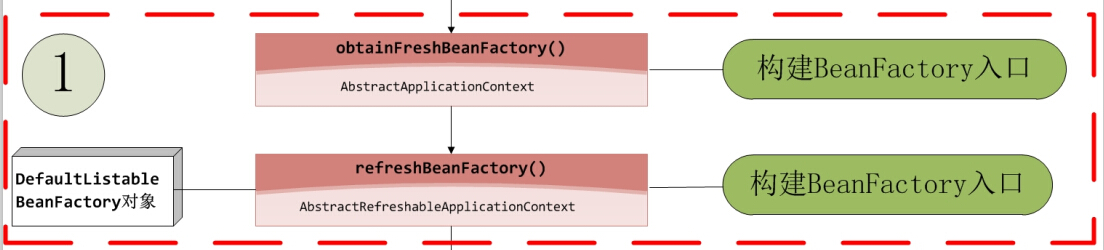
这个过程的入口是refresh方法中的obtainFreshBeanFactory()方法。整个过程构建了一个DefaultListableBeanFactory对象,这也就是IOC容器的实际类型。这一过程的核心如下:
2.1.1 obtainFreshBeanFactory
这个方法的作用是通知子类去初始化ioc容器,它调用了AbstractRefreshableApplicationContext的refreshBeanFactory 方法 进行后续工作。同时在日志是debug模式的时候,向日志输出初始化结果。
protected ConfigurableListableBeanFactory obtainFreshBeanFactory() {
        refreshBeanFactory();
        ConfigurableListableBeanFactory beanFactory = getBeanFactory();
        if (logger.isDebugEnabled()) {
            logger.debug("Bean factory for " + getDisplayName() + ": " + beanFactory);
        }
        return beanFactory;
    }
2.1.2 refreshBeanFactory
这个方法在创建IOC容器前,如果已经有容器存在,那么需要将已有的容器关闭和销毁,保证refresh之后使用的是新建立的容器。同时 在创建了空的IOC容器后,开始了对BeanDefitions的载入
protected final void refreshBeanFactory() throws BeansException {
        if (hasBeanFactory()) {
            destroyBeans();
            closeBeanFactory();
        }
        try {
            DefaultListableBeanFactory beanFactory = createBeanFactory();//创建了IOC容器
            beanFactory.setSerializationId(getId());
            customizeBeanFactory(beanFactory);
            loadBeanDefinitions(beanFactory);// 启动对BeanDefitions的载入
            synchronized (this.beanFa
原创不易,完成人机校验,阅读全文