【译】用Java创建你的第一个区块链-part2:可交易
区块链是分布式数据存储、点对点传输、共识机制、加密算法等计算机技术的新型应用模式。所谓共识机制是区块链系统中实现不同节点之间建立信任、获取权益的数学算法 。
本系列教程旨在帮助你了解如何开发区块链技术。【译】用Java创建你的第一个区块链-part2
本章目标
创建一个简单的钱包。
使用我们的区块链发送带签名的交易。
感觉很吊
这样我们就有自己的加密货币
值得注意的是,这里创建的区块链并不是功能完全的完全适合应用与生产的区块链,相反只是为了帮助你更好的理解区块链的概念。

别担心,这实际上是很简单的,但比上一个教程要长!
在上衣章节【译】用Java创建你的第一个区块链-part2,我们已经有了一个基本的区块链,但在区块链中存放的是一些无用的信息。今天我们将用交易取代这些信息(我们的区块将能够保存多个交易),允许我们创建一个非常简单的加密货币,我们的货币名字NoobCoin。
本教程是在上一边基础上实现的
导入 bounceycastle和
GSON
准备一个钱包
在加密货币中,在区块链作为交易时,货币所有权可以进行转移,每个参与者都有一个自己私有的地址来发送或者是收取货币。,钱包可以存储这些地址。因此钱包就是可以在区块链上进行新交易的软件。
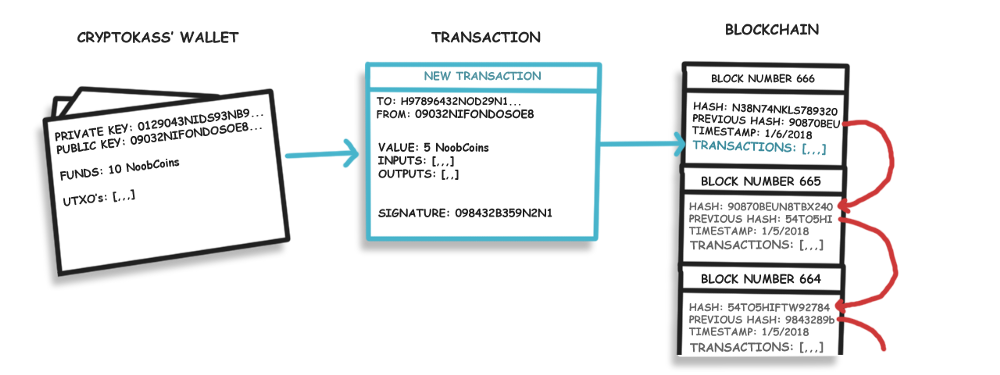
Don’t worry about the information on the transaction, that will be explained soon
让我们创建一个钱包类来保存公钥和私钥:
package noobchain;import java.security.*;public class Wallet {
	public PrivateKey privateKey;
	public PublicKey publicKey;}
公钥和私钥究竟是起到什么作用呢,其实公钥的作用就是地址,你可以分享你的公钥给别人以此来获取付款,而你的私钥的作用是为了对交易进行签名,这样其他人就不可以花费你的金额除非它拥有你的私钥,所以对于每个人而言我们必须保护好我们的私钥,不能透露我们的私钥信息给其他人。同时在我们进行交易的时候我们也会同时发送我们的公钥由此来验证我们的签名是有效的而且没有数据被篡改。
我们在密钥对KeyPair生成私有和公钥。我们将使用椭圆曲线加密来生成我们的密钥对KeyPair。让我们将generateKeyPair()方法添加到我们的钱包类中,并在构造函数中调用它:
私钥用于签署我们不想被篡改的数据。公钥用于验证签名。
package noobchain;import java.security.*;public class Wallet {

	public PrivateKey privateKey;
	public PublicKey publicKey;

	public Wallet(){
		generateKeyPair();
	}

	public void generateKeyPair() {
		try {
			KeyPairGenerator keyGen = KeyPairGenerator.getInstance("ECDSA","BC");
			SecureRandom random = SecureRandom.getInstance("SHA1PRNG");
			ECGenParameterSpec ecSpec = new ECGenParameterSpec("prime192v1");
			// Initialize the key generator and generate a KeyPair
			keyGen.initialize(ecSpec, random);   //256 bytes provides an acceptable security level
	        	KeyPair keyPair = keyGen.generateKeyPair();
	        	// Set the public and private keys from the keyPair
	        	privateKey = keyPair.getPrivate();
	        	publicKey = keyPair.getPublic();
		}catch(Exception e) {
			throw new RuntimeException(e);
		}
	}
	}
你不需要完全理解椭圆曲线加密算法的核心逻辑究竟是什么,你只需要它是用来创建公钥和私钥,以及公钥和私钥分别所起到的作用是什么就可以了。
现在我们已经又了钱包类的大概框架,下面我们再来看一下交易类。

交易和数字签名
每笔交易将携带一定以下信息:
资金付款人的公匙信息。
资金收款人的公匙信息。
被转移资金的金额。
输入,它是对以前的交易的引用,证明发送者有资金发送。
输出,显示交易中收款方相关地址数量。(这些输出被引用为新交易的输入)
一个加密签名,证明该交易是由地址的发送者是发送的,并且数据没有被更改。(阻止第三方机构更改发送的数量)
让我们创建这个新的交易类:
import java.security.*;import java.util.ArrayList;public class Transaction {

	public String transactionId; // this is also the hash of the transaction.
	public PublicKey sender; // senders address/public key.
	public PublicKey reciepient; // Recipients address/public key.
	public float value;
	public byte[] signature; // this is to prevent anybody else from spending funds in our wallet.

	public ArrayList<TransactionInput> inputs = new ArrayList<TransactionInput>();
	public ArrayList<TransactionOutput> outputs = new ArrayList<TransactionOutput>();

	private static int sequence = 0; // a rough count of how many transactions have been generated.

	// Constructor:
	public Transaction(PublicKey from, PublicKey to, float value,  ArrayList<TransactionInput> inputs) {
		this.sender = from;
		this.reciepient = to;
		this.value = value;
		this.inputs = inputs;
	}

	// This Calculates the transaction hash (which will be used as its Id)
	private String calulateHash() {
		sequence++; //increase the sequence to avoid 2 identical transactions having the same hash
		return StringUtil.applySha256(
				StringUtil.getStringFromKey(sender) +
				StringUtil.getStringFromKey(reciepient) +
				Float.toString(value) + sequence
				);
}}我们还应该创建空的transactioninput和transactionoutput类,不要担心我们可以在后面填写它们。
我们的交易类还将包含生成/验证签名和验证交易的相关方法,那么签名的意图是什么?签名在我们的区块链中执行了两个非常重要的任务:第一,签名用来保证只有货币的拥有者才可以用来发送自己的货币,第二,签名用来阻止其他人试图篡改提交的交易。
即私钥被用来签名数据,而公钥用来验证其完整性。
举个例子:Bob 想要发送2个加密货币给Sally,他们用各自的钱包创建了交易,并提交到全网的区块链中作为一个新的区块,一个挖矿者试图篡改接受者把2个加密货币给John,但是幸运的事,Bob在交易数据中已经用私钥进行了签名,这就允许了全网中的任何节点使用小明的公匙进行验证数据是否已经被篡改(因为没有其他人的公钥可以用来验证小明发出的这笔交易)。
从前面的代码中我们可以看到我们的签名将是一堆字符串,所以让我们创建一个方法来生成它们。首先我们在StringUtil类中创建产生签名的方法。
public static byte[] applyECDSASig(PrivateKey privateKey, String input) {
		Signature dsa;
		byte[] output = new byte[0];
		try {
			dsa = Signature.getInstance("ECDSA", "BC");
			dsa.initSign(privateKey);
			byte[] strByte = input.getBytes();
			dsa.update(strByte);
			byte[] realSig = dsa.sign();
			output = realSig;
		} catch (Exception e) {
			throw new RuntimeException(e);
		}
		return output;
	}

	//Verifies a String signature
	public static boolean verifyECDSASig(PublicKey publicKey, String data, byte[] signature) {
		try {
			Signature ecdsaVerify = Signature.getInstance("ECDSA", "BC");
			ecdsaVerify.initVerify(publicKey);
			ecdsaVerify.update(data.getBytes());
			return ecdsaVerify.verify(signature);
		}catch(Exception e) {
			throw new RuntimeException(e);
		}
	}

	public static String getStringFromKey(Key key) {
		return Base64.getEncoder().encodeToString(key.getEncoded());
	}
不用担心你不能理解这些方法的内容,你所需要知道的就是
applyECDSASig方法的输入参数为付款人的私钥和需要加密的数据信息,签名后返回字节数组。而verifyECDSASig方法的输入参数为公钥、加密的数据和签名,调用该方法后返回true或false来说明签名是否是有效的。getStringFromKey返回任何key的编码字符串
让我们使用签名的方法在交易类中,增加generatesiganature() 和 varifiysignature()方法:
//Signs all the data we dont wish to be tampered with.public void generateSignature(PrivateKey privateKey) {
	String data = StringUtil.getStringFromKey(sender) + StringUtil.getStringFromKey(reciepient) + Float.toString(value)	;
	signature = StringUtil.applyECDSASig(privateKey,data);		}//Verifies the data we signed hasnt been tampered withpublic boolean verifiySignature() {
	String data = StringUtil.getStringFromKey(sender) + StringUtil.getStringFromKey(reciepient) + Float.toString(value)	;
	return StringUtil.verifyECDSASig(sender, data, signature);}
在现实中,您可能希望签名更多信息,例如使用的输出/输入和/或时间戳(现在我们只是签名最低限度的信息)
签名将由矿工验证,只有签名验证成功后交易才能被添加到区块中去。

当我们检查区块链的有效性时,我们也可以检查签名
测试钱包和签名
现在我们简单的进行一些测试,在主方法中,我们增加了一些新的变量也替换了我们之前在主方法中的一些内容。
import java.security.Security;import java.util.ArrayList;import java.util.Base64;import com.google.gson.GsonBuilder;public class NoobChain {

	public static ArrayList<Block> blockchain = new ArrayList<Block>();
	public static int difficulty = 5;
	public static Wallet walletA;
	public static Wallet walletB;

	public static void main(String[] args) {
		//Setup Bouncey castle as a Security Provider
		Security.addProvider(new org.bouncycastle.jce.provider.BouncyCastleProvider());
		//Create the new wallets
		walletA = new Wallet();
		walletB = new Wallet();
		//Test public and private keys
		System.out.println("Private and public keys:");
		System.out.println(StringUtil.getStringFromKey(walletA.privateKey));
		System.out.println(StringUtil.getStringFromKey(walletA.publicKey));
		//Create a test transaction from WalletA to walletB
		Transaction transaction = new Transaction(walletA.publicKey, walletB.publicKey, 5, null);
		transaction.generateSignature(walletA.privateKey);
		//Verify the signature works and verify it from the public key
		System.out.println("Is signature verified");
		System.out.println(transaction.verifiySignature());

	}
确定要添加
bounceycastle依赖
我们创建了两个钱包walleta和walletb,然后打印了walleta的私钥和公钥。生成一个交易并使用walleta的私钥对其进行签名。
打印
Connected to the target VM, address: '127.0.0.1:55757', transport: 'socket'Privat
原创不易,完成人机校验,阅读全文